Tianzhushan National Forest Park covers wooded hills on the north-western edge of Xiamen, rising to 933m at Tianzhu Peak. Marked trails link reservoirs, lakeside boardwalks, bamboo groves and steep-sided valleys, and pass two working temples, Longmen and Zhenji. Routes range from an hour on level ground to a half-day climb, and the park is itself a National AAAA Tourist Attraction.
Distance: 4km
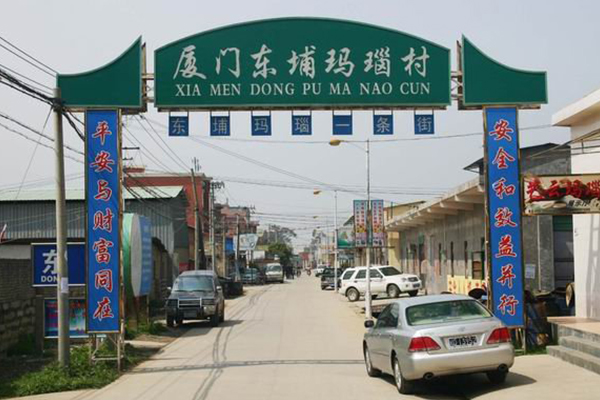
Dongpu Agate Village grew from a handful of workshops in the mid-1990s into a village of more than a hundred outlets, and now handles the largest share of China's imported agate. Rough stone from Brazil, Uruguay and elsewhere is cut and polished on site into beads, bracelets, carvings and larger display pieces, sold directly from the street-front shops that line the village.
Distance: 7km
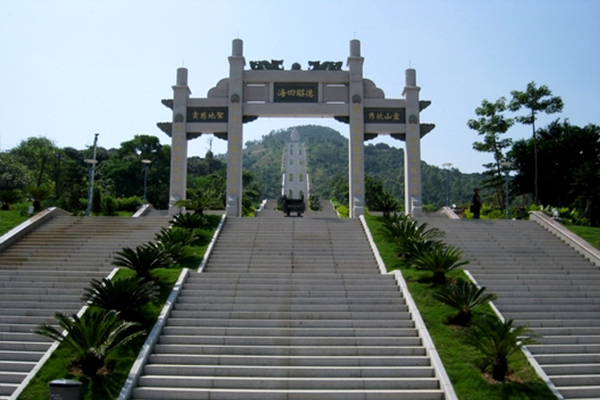
Qingjiao Tzu Chi Gong, also known as the East Palace, was built in Haicang District in 1151, during the Southern Song dynasty, in honour of Wu Zhenren (保生大帝), a physician credited with treating the sick using local hot springs. The palace is one of Xiamen's twelve designated historic sites and is under national protection.
Distance: 13km
Xiamen Stone Chamber Monastery sits at the foot of Daimao Mountain, facing Lingjiu Mountain, and is dedicated to the Medicine Buddha (药师佛). It began in 686 as a meditation chamber and became a monastery in 925. Rebuilt by the monk Hui'an in 1334, it fell into disrepair in the late 1400s, and was restored between 1569 and 1571 with the addition of a Dharma hall, mountain gate and corridors.
Distance: 12km
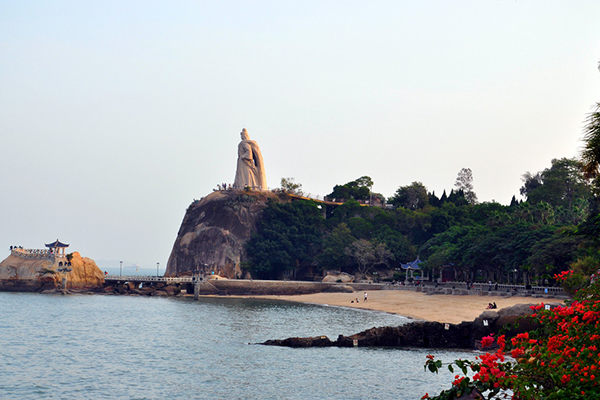
Gulangyu is a car-free islet of 1.88 square kilometres, a short ferry ride across the harbour from Xiamen, listed as a UNESCO World Heritage Site in 2017 for the international settlement built here between the 1840s and 1940s. Former consulates, churches, villas and gardens line its lanes, along with the Piano Museum, the Taiwanese-influenced Shuzhuang Garden, and a Bird Park.
Distance: 26km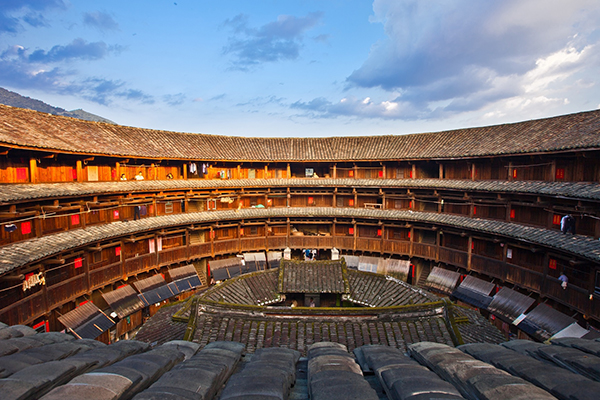
The mountainous countryside of western Fujian is scattered with clusters of tulou, earthen buildings raised by Hakka and Minnan families, forty-six of them inscribed as a UNESCO World Heritage Site in 2008. Round or square and several storeys high, each is a fortified village in itself, housing a whole clan behind rammed-earth walls more than a metre thick, with a single gate against bandits.
Distance: Nanjing 131km, Yongding 170km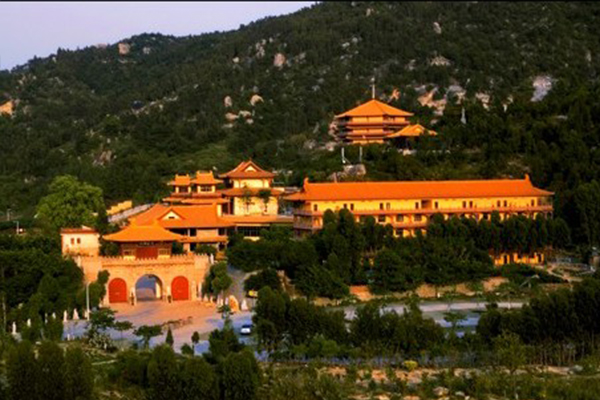
Nanputuo Temple sits below Wulao Peak facing the sea, on a site of around 258,000 square metres. Founded in the late Tang or Five Dynasties period, it was rebuilt in 1684 and named after Mount Putuo in Zhejiang, the sacred site of Guanyin. Its Sutra Repository holds a Burmese jade Buddha, a Song dynasty bell and a Ming bronze twenty-four-armed Guanyin.
Distance: 27km1888-1889 Fulian Road, Haicang District, Xiamen, China 361027 Tel: +86-592-6312222 网站ICP: 闽ICP备05008240号-1
Riyuegu Hotsprings. All rights reserved. Powered by: Fujian Fu Ruige Network Technology




 Booking